
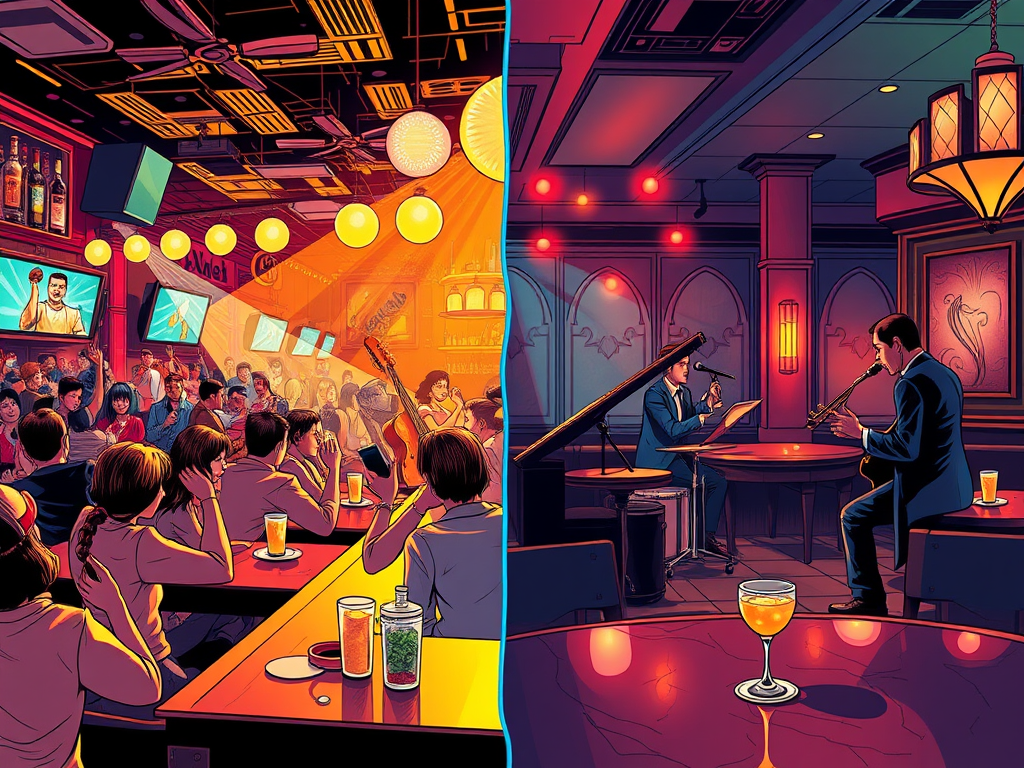
The musical identity of a bar is as crucial as its drink menu and decor. It sets the mood, influences the clientele’s behavior, and ultimately tells a story about the establishment’s brand.1 From the high-energy beats of a sports bar to the sophisticated jazz of a cocktail lounge, the choice of music is a carefully calibrated decision designed to create a specific atmosphere and cater to a particular demographic. This report explores the various music genres most commonly found in different types of bars, including the unique case of hotel bars.
Sports Bars and Pubs: The Sound of Camaraderie
In sports bars and traditional pubs, the music serves a distinct purpose: to build a sense of community and excitement without overshadowing the main event—be it a major game or lively conversation. The playlists are generally designed for broad appeal and high energy.2
- Classic and Arena Rock: These genres are a staple for a reason. Tracks by artists like Queen, AC/DC, Led Zeppelin, and Guns N’ Roses are instantly recognizable and evoke a feeling of nostalgia and collective euphoria. They are anthemic, easy to sing along to, and provide an energizing backdrop for cheering on a favorite team.
- Country and Folk Rock: In many regions, especially in the United States, country music—both classic and modern—is a popular choice, fostering a relaxed, down-to-earth atmosphere. Artists like Johnny Cash or Garth Brooks are often found on jukeboxes, appealing to a sense of shared heritage and simplicity.3
- Pop and Upbeat Indie: For a more contemporary feel, some sports bars and pubs might incorporate a mix of popular chart-toppers and high-energy indie rock. This can attract a younger crowd while maintaining a feel-good vibe that doesn’t require deep concentration. The music is a backdrop, a familiar sound that encourages a good time.
Cocktail Lounges and Speakeasies: The Soundtrack of Sophistication
These venues prioritize a refined, intimate, and sophisticated experience. The music is a key ingredient in creating a luxurious ambiance that encourages conversation and sets a leisurely pace.
- Jazz and Blues: The quintessential genres for this type of bar. Classic and contemporary jazz, particularly genres like acid jazz and smooth jazz, create a cool, elegant backdrop.4 The complex rhythms and improvisational nature of the music are a perfect match for the craft and artistry of a mixologist. Blues, with its soulful and often melancholic tones, provides a rich, emotional layer.
- Lounge and Downtempo Electronic: This is a popular modern alternative to traditional jazz. Genres like chillwave, trip-hop (think Massive Attack), and nu-jazz offer a relaxed yet modern soundscape. They are often instrumental or feature subtle vocals, keeping the energy low and allowing conversation to flow easily. This music is designed to be unobtrusive yet interesting, a subtle enhancement to the environment rather than the focal point.
- Soul and Funk: A more upbeat but still sophisticated choice, classic soul and funk can add a groovy, charismatic element to a cocktail bar, especially later in the evening. It’s music with a timeless appeal that encourages a subtle sway and can transition into a slightly more lively atmosphere without becoming a dance party.
Dive Bars and Neighborhood Pubs: The Sound of Authenticity
Dive bars are defined by their no-frills, unpretentious atmosphere.5 The music is often an eclectic mix that reflects the bar’s history and the tastes of its regulars. It’s about a jukebox full of classics, not a curated playlist.
- Classic Rock and Grunge: The foundation of most dive bar jukeboxes. Hits from the 70s, 80s, and 90s are prominent, including rock anthems and gritty grunge tracks. This music feels authentic and lived-in, just like the bar itself.
- Punk and Hard Rock: For a more rebellious or edgy vibe, punk rock and hard rock can dominate, providing an outlet for a more intense, high-energy crowd.
- Jukebox Favorites: The true musical character of a dive bar comes from its jukebox. This allows for a democratic and often chaotic mix of genres, from classic country to 80s pop to a lone hip-hop track, reflecting the diverse and unpredictable tastes of the clientele.
The Hotel Bar: A Hybrid of Tastes
Hotel bars are a unique category, as they must cater to a transient and diverse clientele of travelers. The music is a critical tool for creating a specific mood, from sophisticated and relaxing to a lively pre-dinner buzz.
- Lounge and Ambient Music: During the day and early evening, hotel bars often lean into ambient and lounge music.6 This creates a calm, welcoming atmosphere for guests checking in or unwinding after a long day of travel. It’s designed to be inoffensive and widely appealing, subtly enhancing the sense of luxury and comfort.
- Live Jazz or Acoustic Sets: Many upscale hotel bars feature live entertainment, which elevates the experience.7 A live jazz trio or a solo acoustic guitarist adds a layer of class and authenticity that a pre-recorded playlist cannot match.
- Contemporary Pop and Soft Rock: Later in the evening, as the bar becomes a destination for locals as well, the music may transition to a slightly more energetic mix of contemporary pop and soft rock. This can help create a more lively atmosphere, encouraging a social dynamic that feels less like a quiet lounge and more like a destination.
In summary, the music in a bar is a powerful environmental cue. It communicates brand identity and influences customer experience. Whether it’s the raucous rock of a sports bar, the elegant jazz of a cocktail lounge, or the eclectic mix of a hotel bar, the chosen soundtrack is a key ingredient in the recipe for success.


