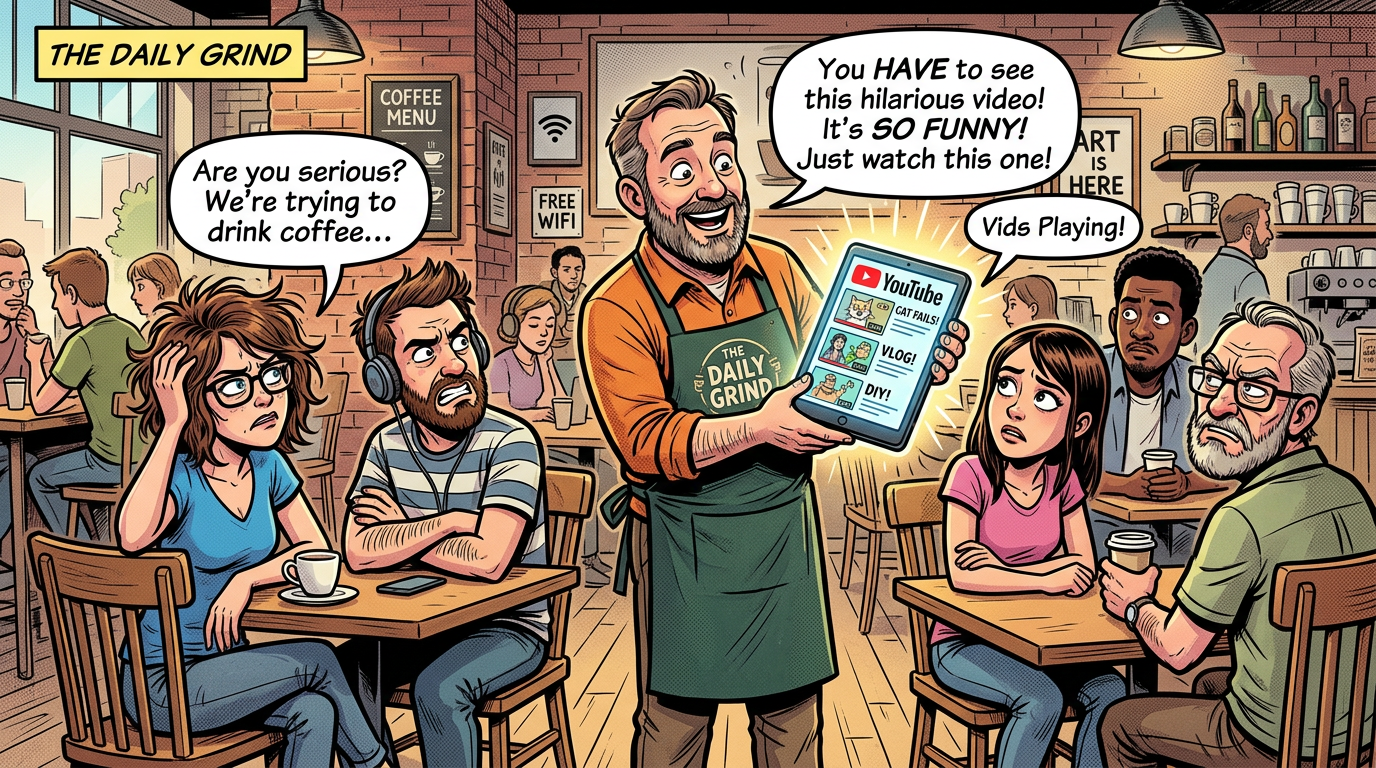
Many business owners assume that paying for Spotify Premium gives them the right to play music in their cafe, restaurant, salon, hotel, spa or retail store.
It feels like a reasonable assumption. You pay for music. You remove advertising. You can choose playlists. You can play songs through a speaker. So it may seem natural to think that Spotify can also be used as background music in a business.
Unfortunately, that is not usually the case.
Spotify is designed for personal listening, not for public or commercial use in a business where customers, staff and visitors hear the music as part of the business environment.
For small businesses, this distinction matters. Playing music at home, in a car or through headphones is very different from playing music in a commercial space. When music becomes part of the customer experience, the business needs to think about licensing, consistency, atmosphere and daily operation.
That is why Spotify is not usually the right choice for music in your business.
Spotify Is A Consumer Streaming Service
Spotify is one of the best-known music streaming services in the world. For personal listening, it is convenient, familiar and easy to use.
That does not make it the right tool for business background music.
Consumer streaming services are built around individuals. They are designed for people listening privately, choosing their favourite artists, building personal playlists, discovering new songs and enjoying music for themselves.
A business environment is different.
In a cafe, restaurant, salon or shop, the music is not just for one person. It is part of the atmosphere being presented to customers. It affects the sound of the room, the customer experience and the brand of the business.
That is why businesses need to be careful before using consumer music apps as background music systems.
Paying For Premium Does Not Usually Mean Business Use
One of the biggest misunderstandings is the idea that paying for a premium subscription automatically gives a business the right to use the service commercially.
For many business owners, this is the point of confusion.
They are not trying to avoid paying. They are already paying. They simply assume that a paid subscription means they can use the music in their business.
But a consumer subscription is still normally a consumer subscription. It may remove adverts, allow downloads, improve audio quality or provide more control for personal listening, but that does not mean it grants permission to play music publicly in a commercial setting.
This is the key difference small business owners need to understand.
The question is not only, “Am I paying for music?”
The better question is, “Is this music service licensed and intended for use in my business?”
Music In A Business Is Part Of The Customer Experience
Background music in a business is not just entertainment.
It helps shape how customers feel.
In a cafe, music can make the space feel calm, warm and welcoming.
In a restaurant, music can support breakfast, lunch, dinner and evening atmosphere.
In a salon, music can help the experience feel stylish and relaxed.
In a spa, music can support calm and comfort.
In a retail store, music can help create energy and make the space feel active.
In a hotel lobby, music can influence the first impression guests receive when they arrive.
Because music affects the business experience, it should be treated as part of the operating environment. It should not be left to random playlists, staff arguments or whatever someone happens to choose that day.
The Practical Problems With Using Spotify In A Business
Licensing is the biggest concern, but it is not the only problem.
Even if a business owner ignores the licensing issue, consumer streaming apps create practical problems for small businesses.
The music may not stay consistent.
Playlists can change.
Staff may choose unsuitable music.
Explicit tracks may appear unexpectedly.
A playlist may begin well but later move into a completely different mood.
Internet problems can interrupt playback.
Staff may forget to change music at the right time.
The business may sound different every day depending on who is working.
These are not small issues. They directly affect the customer experience.
A business needs music that is reliable, consistent and suitable for the room. It should not depend on personal taste or constant manual attention.
Staff Should Not Have To Manage The Music
Many small businesses accidentally turn staff into music managers.
Someone opens Spotify. Someone searches for a playlist. Someone presses play. Later, someone skips a song. Someone else changes the playlist. Another staff member disagrees. A manager steps in. Then the next day, the whole process starts again.
This is not efficient.
Staff already have work to do. In a cafe, they are serving drinks, cleaning tables and handling payments. In a restaurant, they are managing service, customers and food orders. In a salon, they are looking after appointments and clients. In a shop, they are handling customers, stock and sales.
Music should not become another daily decision.
A proper business music system should reduce staff involvement, not create more tasks.
Random Playlists Create Random Atmosphere
A business works hard to create a consistent brand.
The decor is chosen carefully. The lighting matters. The menu matters. The service style matters. The products, prices and customer journey all matter.
Music should be part of that same thinking.
If the music changes randomly depending on who arrived first, the customer experience becomes inconsistent.
One day the cafe feels relaxing.
The next day it feels loud and distracting.
One evening the restaurant feels warm and intimate.
The next evening it feels like someone’s personal playlist.
One staff member chooses acoustic music.
Another chooses pop.
Another chooses a playlist that starts well but later includes songs that do not fit the room.
Customers may not always complain directly, but they notice the atmosphere. If the music feels wrong, the business feels less professional.
Business Music Needs Scheduling
One of the biggest advantages of a dedicated business music system is scheduling.
Most businesses do not have the same mood all day.
A cafe may need relaxed music in the morning, brighter music at lunchtime and calmer music in the afternoon.
A restaurant may need breakfast music, lunch music, evening dining music and weekend energy.
A hotel may need lobby music, breakfast music, lounge music and evening bar atmosphere.
A salon may need stylish, relaxed music that supports the customer experience without distracting from treatments.
A retail store may need more energy during busy shopping periods and a softer feel during quieter times.
Manually changing playlists throughout the day is unrealistic for many small businesses. Staff are busy. Managers are busy. People forget.
Scheduled music solves this by changing the mood automatically.
The business decides the plan once, and the system follows it.
Why One Playlist Is Usually Not Enough
Some businesses try to solve the problem by creating one long playlist.
This can work better than changing random playlists every day, but it is still limited.
A single playlist may not fit every time of day.
Music that feels right at 8am may feel too slow at 1pm.
Music that works during a busy lunch service may feel too energetic during a quiet afternoon.
Music that fits a Saturday evening may not fit a Monday morning.
Business background music works better when it follows the natural rhythm of the business.
This does not mean the owner has to micromanage every song. It means the system should be able to change mood automatically across the day.
That is what music scheduling is designed to do.
Spotify Was Not Built Around Business Types
A small business does not only need access to songs.
It needs a practical music system that understands the business environment.
A cafe owner may want music that works for morning coffee, lunch and afternoon relaxation.
A restaurant owner may want music that supports different dining periods.
A hotel manager may want lobby, breakfast, lounge and bar music.
A salon owner may want something stylish, relaxing and consistent.
A retail store owner may want music that supports browsing and shopping without becoming distracting.
Consumer streaming platforms are not built primarily around these operating needs. They are built around personal listening, discovery, artists, albums, genres and user preferences.
That is useful at home.
It is less useful when the business needs a reliable atmosphere every day.
Business Music Should Work Out Of The Box
Small business owners do not have time to build a perfect music system from scratch.
They do not want to spend hours creating playlists, testing moods, planning dayparts and training staff.
The best business music systems provide strong starting points.
A cafe should be able to choose a cafe-style music schedule.
A restaurant should be able to choose a restaurant schedule.
A hotel should be able to choose a hotel schedule.
A salon, spa or retail store should be able to start with a profile that already makes sense for that kind of business.
Then, when the owner is ready, they can personalise.
They can adjust timings.
They can change music moods.
They can add seasonal music.
They can fine-tune the schedule.
But they should not be forced to do all of that before the system becomes useful.
A good business music app should work quickly first and allow deeper personalisation later.
Fewer Clicks Means Better Business Software
Small businesses already manage too many systems.
Payment systems. Booking tools. Staff apps. Delivery apps. Review platforms. Social media accounts. Stock systems. Marketing tools.
Adding music should not add more stress.
A good background music app should require the minimum number of clicks and decisions needed to achieve the goal.
The goal is not to spend the morning searching for playlists.
The goal is to play suitable, licensed business music that supports the atmosphere.
The more complicated the system becomes, the less likely staff are to use it properly.
That is why dedicated business music systems should focus on simplicity, automation and scheduling.
The Licensing Question Cannot Be Ignored
Music licensing can feel confusing, especially for small businesses.
Many owners do not want to become experts in music rights, performing rights organisations or public performance rules. They simply want to play music in their business without creating problems.
That is understandable.
But the licensing question still matters.
Playing music in a commercial space is different from private listening. A business should make sure that the music it uses is suitable for business use and that it understands any licence obligations that may apply in its location.
This article is not legal advice. Business owners should check their own obligations.
However, from a practical business point of view, relying on a consumer streaming account is not a strong long-term solution for background music in a cafe, restaurant, salon, retail store, hotel or spa.
A dedicated business music system is usually the more sensible route.
Why Dedicated Business Music Systems Make More Sense
A dedicated business music system is designed around commercial use.
It should help with the things businesses actually need:
Licensed music for business.
Curated playlists suitable for commercial environments.
Music moods that match customer atmosphere.
Scheduling across the day.
Less staff involvement.
Fewer random playlist decisions.
A more consistent customer experience.
Less time spent building and maintaining playlists.
A system that can run without constant attention.
This is why business music services make more sense than consumer streaming apps for many small businesses.
The issue is not whether Spotify is a good personal music service. It is.
The issue is whether it is the right tool for business background music.
For most customer-facing businesses, the answer is no.
How Melody Pods Helps
Melody Pods was built specifically for business use.
It is designed for businesses that want music to work without daily playlist stress.
Instead of asking staff to search for playlists every morning, Melody Pods gives businesses a simpler way to run background music that supports the atmosphere of the business.
Music can be scheduled throughout the day, so the mood changes automatically when the business needs it to change.
A cafe can move from relaxed morning music to brighter lunch music.
A restaurant can move from breakfast to lunch to evening dining atmosphere.
A hotel can support lobby, breakfast, lounge and evening moods.
A salon or spa can create a calm and consistent customer experience.
A retail store can use music to support the energy of the shop.
The system is designed to help businesses start quickly, then personalise more deeply if and when they are ready.
Final Thoughts
Spotify is popular, familiar and useful for personal listening.
But business background music has different requirements.
A business needs music that is suitable for commercial use, consistent for customers, simple for staff and structured around the rhythm of the working day.
It needs music that does not depend on random playlists, personal taste or someone remembering to change the mood manually.
For cafes, restaurants, salons, spas, hotels and retail stores, a dedicated business music system is usually a better fit than a consumer streaming app.
Melody Pods was created for businesses that simply want music to just work.
Sign up today for a free one month trial of the Melody Pods music scheduling service and see how simple fully licensed music for business can be.